
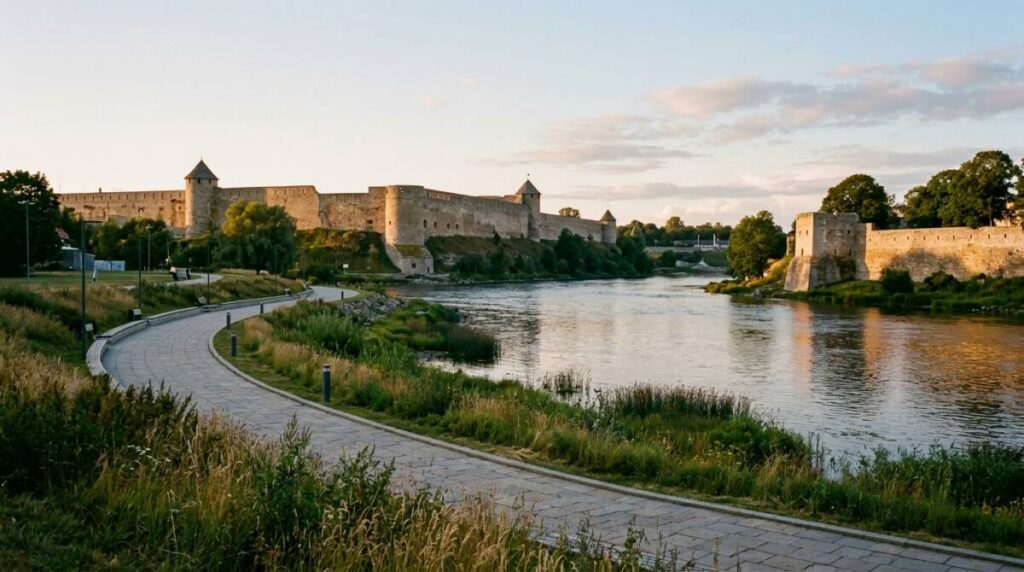
Guide to Narva's Neighborhoods: Best Areas for Families vs. Rental Investments
Narva is Estonia's third-largest city—compact and remarkably convenient for everyday living, where driving from one end of town to the center takes just 7 to 10 minutes. Nevertheless, Narva comprises several distinct residential districts, each with its own architectural character, atmosphere, infrastructure, and property price levels.
Whether you are relocating to Narva from another city, upgrading to a larger family apartment, or searching for a liquid property for long-term or short-term rental, this neighborhood guide will help you navigate the local market.
1. Pähklimäe and the Kangelaste Area — The Family Favorite
The northwestern part of the city (Pähklimäe, Rahu, Kangelaste prospekt, and Rakvere streets) is Narva's newest residential district, built predominantly during the 1980s.
- Housing Stock: Mainly 5- and 9-story precast panel buildings featuring improved Soviet-era layouts (the sought-after "Narva model" and series with spacious 8–9 m² kitchens, separate rooms, and loggias). The 9-story buildings have elevators—a major advantage for families with strollers and older residents.
- Infrastructure: Major shopping centers (Astri Keskus, Prisma, Lidl, Espak), schools, high schools, kindergartens, and bus routes connecting all parts of the city are within easy walking distance.
- Standout Feature: Right behind the neighborhood lies the Äkkeküla sports and recreation area—offering illuminated cross-country ski and running trails, cycling paths, a pine forest, and an adventure park.
- Best For: Families with children, buyers looking for 2-, 3-, and 4-room apartments, and investors seeking stable long-term tenants. Apartments here are among the most liquid in the city.
2. City Center (Tallinna mnt, Puškini, Peetri Plats) and Vanalinn (Old Town)
The area stretching along the city's main artery—Tallinna maantee, Aleksander Puškini, Hariduse, and Vestervalli streets—as well as the quarter surrounding Town Hall Square and the University of Tartu Narva College.
- Housing Stock: A blend of solid Stalinist-era brick buildings with high ceilings and thick walls, 5-story brick and panel blocks, and select renovated buildings offering views of Narva Hermann Castle and the river promenade.
- Infrastructure: Everything is within walking distance—Fama Keskus and Kerese Keskus shopping malls, restaurants, cafés, the Geneva cultural center, state high schools, the university college, the art gallery, and the famous Narva River Promenade.
- Best For:
- Investors targeting short-term and mid-term rentals (visiting specialists, university lecturers, and tourists always prefer staying within walking distance of the castle and promenade);
- Young couples and professionals who enjoy an urban lifestyle;
- Buyers for whom it matters that the apartment holds its value well.
3. Kreenholm — A Green District with Historic Character
The southern part of the city (Kreenholmi, Joala, Haigla, Kooli põik, and Vassili Gerassimovi streets) developed historically around the famous Kreenholm Textile Manufactory.
- Housing Stock: Highly diverse. Here you will find unique historic red-brick barracks, cozy 2- to 3-story postwar buildings, numerous 5-story brick apartment blocks (prized for their excellent thermal and acoustic insulation), and 9-story buildings along Kreenholmi Avenue.
- Infrastructure: Home to Narva Hospital, the Ice Hall, the city stadium, renovated parks, supermarkets (Maxima XX), and convenient access to the central train and bus stations. The district's long-term potential is closely tied to the revitalization of the historic Kreenholm Manufactory quarter as a cultural and creative hub.
- Best For: Buyers looking for a warm brick apartment at a more accessible price than in the Center or Pähklimäe, healthcare professionals working nearby, and long-term rental investors.
4. Soldino and the Partisani Street Area — An Affordable Entry Point
The western residential district of the city (Soldina, Partisani, Mõisa, and Albert-August Tiimanni streets).
- Housing Stock: Predominantly 5-story panel and block buildings, along with several 9-story buildings and former studio-type dormitories.
- Prices and Demand: Prices per square meter here are traditionally 10–20% more affordable than in Pähklimäe. This makes Soldino very popular among first-time buyers purchasing a home without a heavy mortgage, as well as value-oriented investors buying 1- and 2-room apartments to renovate and rent out for a high percentage return on investment (ROI).
5. Comparison Table of Narva's Districts
| District | Primary Building Types | Price Level | Ideal Purchase Goal |
|---|---|---|---|
| Pähklimäe / Kangelaste | 1980s 5- and 9-story panel blocks (improved layouts, loggias, elevators) | Above Average | Primary residence for families with children, reliable long-term rental |
| City Center / Vanalinn | Brick buildings (Stalinist-era and 5-story blocks), buildings near the promenade and castle | High | Urban living in the heart of the city, short-term and corporate rentals |
| Kreenholm | 4–5- and 9-story brick and panel buildings | Medium / Accessible | Quiet living in a green area, buying a solid brick apartment without overpaying |
| Soldino | 5-story panel buildings, compact apartments | Affordable | First home on a modest budget, high-yield rental investment with fast payback |
| Piiri / Siivertsi / Paemurru | Private residential sector (detached houses and plots) | Varies by Property | Private house with a garden within city limits |