
The Just Transition Fund and New Enterprises in Ida-Virumaa: How They Impact the Rental and Housing Market
Ida-Virumaa is undergoing its largest economic transformation in decades. The European Union's Just Transition Fund (Õiglase ülemineku fond) has channeled hundreds of millions of euros in grants into the county to establish new manufacturing facilities, modern industrial parks (in Narva, Jõhvi, Kohtla-Järve, and Kiviõli), and projects in tourism, education, and the urban environment.
The launch of the neodymium magnet factory in Narva and the expansion of engineering, metalworking, and logistics enterprises in Sillamäe and Jõhvi have a direct impact on the real estate market. Let us examine the housing demand generated by these new jobs and how apartment owners are capitalizing on it.
1. Who Is Renting Homes in Narva, Sillamäe, and Jõhvi Today?
The tenant profile in the region has changed significantly. Alongside local residents and young families, four solvent tenant groups stand out in the market:
- Engineers, equipment technicians, and specialists at new industrial plants. Companies opening or expanding facilities in the IVIA industrial parks (Narva, Jõhvi, and Kohtla-Järve industrial parks) frequently lease apartments directly for their specialists for terms ranging from 6 months to 2–3 years.
- Teachers and education professionals. Driven by educational reforms and national incentive programs attracting teachers to schools and state gymnasiums in Ida-Virumaa (which offer a higher salary coefficient), specialists from other parts of Estonia are relocating to Narva, Sillamäe, Kohtla-Järve, and Jõhvi.
- Healthcare professionals and civil servants. Resident doctors at Ida-Viru Central Hospital (Ahtme/Jõhvi) and Narva Hospital, as well as employees of state agencies and internal security services.
- Construction and engineering teams. The comprehensive renovation of apartment buildings under EIS (KredEx) programs, together with industrial and infrastructure construction, ensures steady demand for medium-term corporate rentals.
2. What Kind of Real Estate Is in Highest Demand Among Tenants?
Whereas 7–10 years ago an owner could rent out an apartment with old wall units and carpets for a nominal fee plus utilities, today's corporate and private tenants have clear requirements:
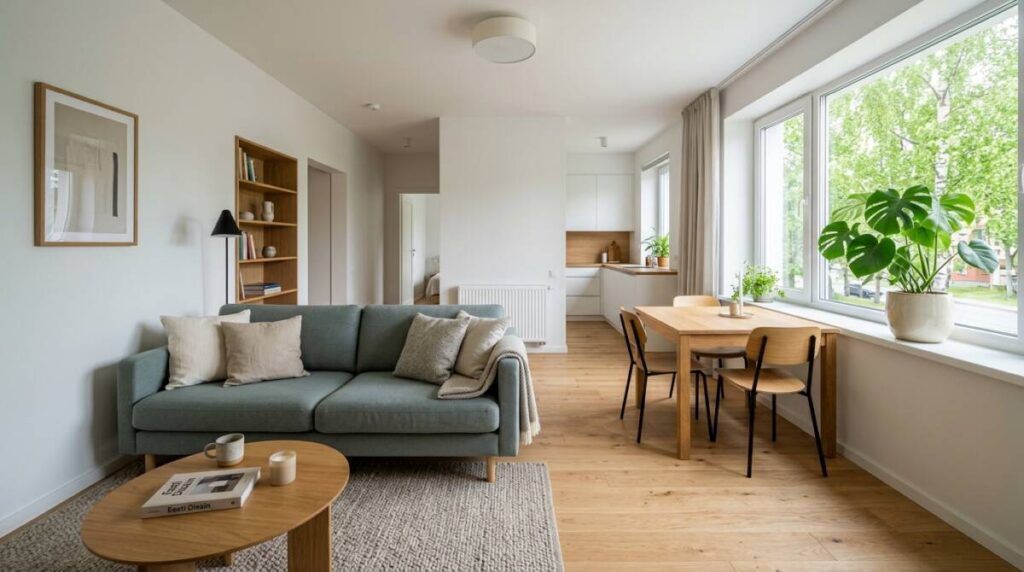
- Bright Scandinavian-style renovation without visual clutter: smooth light-colored walls, quality laminate or luxury vinyl tile (LVT/SPC) flooring, and a modern tiled walk-in shower.
- Full set of household appliances: a washing machine (preferably a washer-dryer), dishwasher, full-size refrigerator, oven or cooktop, and high-speed internet.
- Reasonable winter utility bills: prospective tenants always ask how much the apartment association (korteriühistu — KÜ) bill comes to in January and February, meaning apartments in insulated buildings rent out first.
- Official lease agreement and corporate invoicing capability: companies only rent housing for employees under an official lease agreement (üürileping).
3. Rental Yields (ROI) in Ida-Virumaa
One of Ida-Virumaa's primary advantages for private real estate investors is its low barrier to entry combined with strong cash flow.
| City / Segment | Typical Purchase + Renovation Budget (1–2 Bedroom) | Average Long-Term Monthly Rent (+ Utilities) | Estimated Gross Rental Yield |
|---|---|---|---|
| Narva (Center, Pähklimäe) | €24,000 – €38,000 | €200 – €320 / mo | 8 – 10 % per annum |
| Sillamäe | €14,000 – €26,000 | €150 – €250 / mo | 9 – 11 % per annum |
| Jõhvi / Ahtme | €20,000 – €35,000 | €190 – €300 / mo | 8 – 10 % per annum |
For comparison: in Tallinn, where a 1-bedroom (2-room) apartment costs €130,000–€160,000 and rents for €550–€650 per month, gross rental yields rarely exceed 4.5–5% per annum.
4. How to Rent Out Your Apartment Safely: Rules of Estonian Law (VÕS)
Landlord-tenant relations in Estonia are governed by the Law of Obligations Act (Võlaõigusseadus — VÕS). To ensure your investment generates stable, stress-free income, ISKV Kinnisvara brokers recommend following four essential rules:
- Screen prospective tenants before signing the lease using the payment default register (Maksehäireregister) and public court decisions.
- Prepare a detailed handover report (üleandmise-vastuvõtmise akt) with photographic documentation of furniture, appliances, and all utility meter readings.
- Collect a security deposit (Tagatisraha) equal to 1 to 3 months' rent, or use specialized rental insurance platforms.
- Clearly define cost allocation in the lease (specifying which lines on the KÜ utility bill are paid by the tenant and which by the owner, in accordance with the current version of the VÕS).